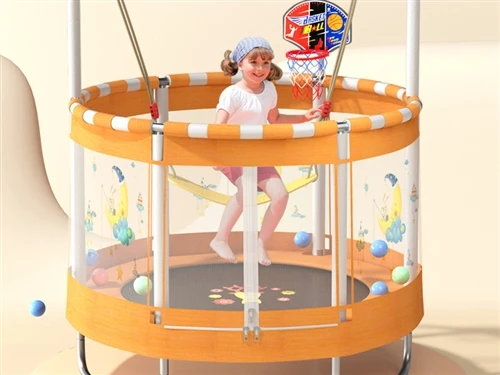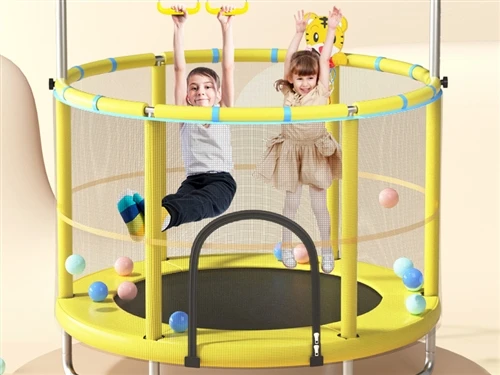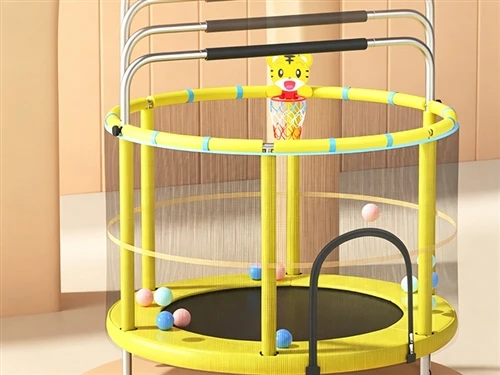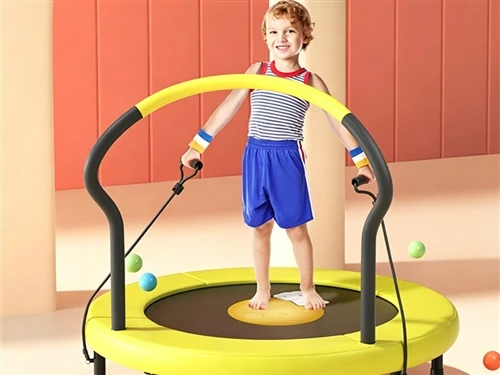
Indoor trampolines are a type of sports equipment that combines entertainment and fitness functions. Commonly found in shopping malls, playgrounds, and other similar settings, they are suitable for children aged three and up, as well as adults. Their core design revolves around safety and fun, providing users with a low-impact, highly interactive exercise experience through a combination of elastic structures and protective components. Compared to traditional outdoor trampolines, indoor versions place greater emphasis on space adaptability and material durability, meeting diverse needs such as family entertainment and commercial operations.
The main frame of an indoor trampoline is typically secured with galvanized high-strength screws to ensure structural stability. The elastic platform is wrapped in thickened PVC skin, providing uniform elastic feedback. The protective components include high-density EVA foam tubing covering the metal tubing to reduce the risk of collision injuries. Plastic components (such as slides) are made of LLDPE rolled plastic, which is UV-resistant and wear-resistant. Wooden components are made of moisture-proofed wood, balancing load-bearing capacity with lightweight design. Some models support customization of parameters such as color, specifications, and weight to adapt to different venues and user preferences.