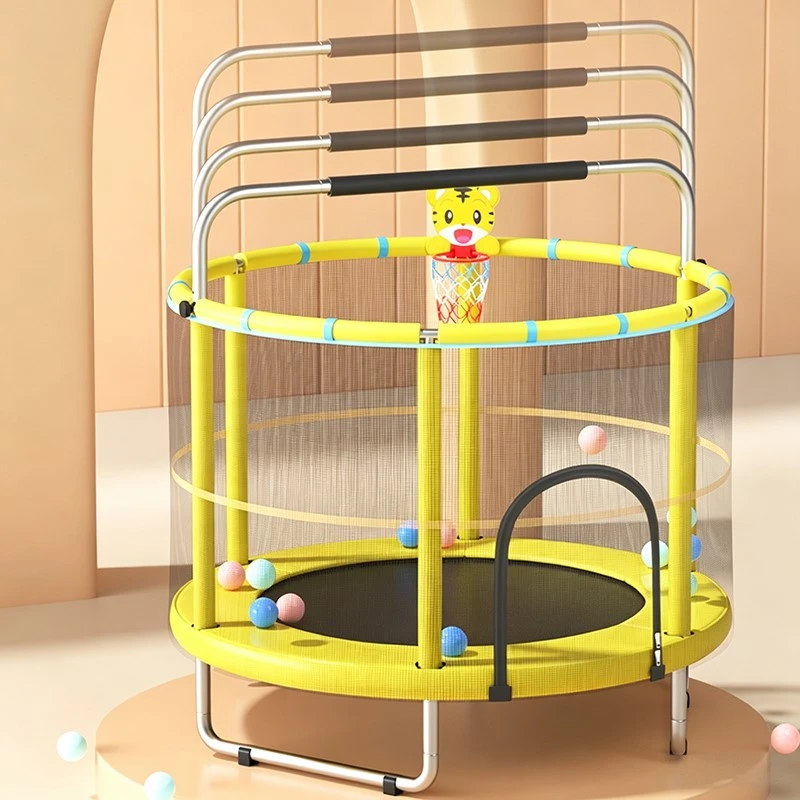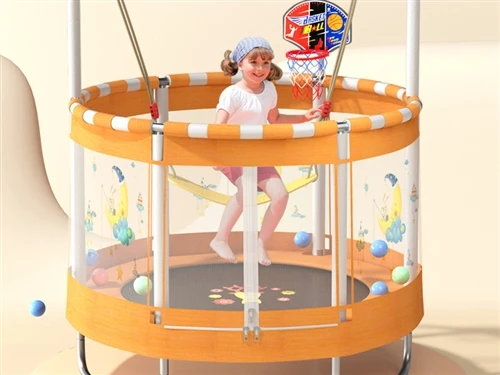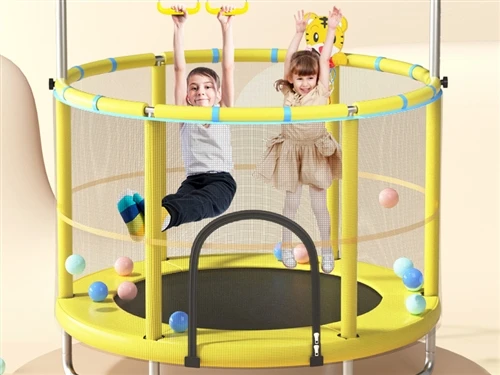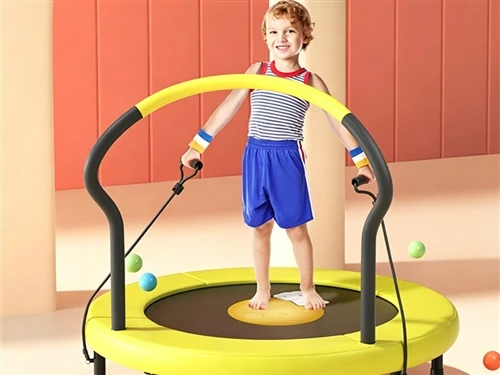
Trampolines, as facilities combining sports and entertainment, have been widely used in outdoor parks, kindergartens, and residential communities in recent years. Their core function is to provide children with a safe space for jumping exercise through an elastic structure. Technically, the elasticity of a trampoline mainly relies on the supporting force of the metal frame and the deformation capacity of the highly elastic fabric. These two elements work together to convert the kinetic energy of the body's fall into a rebound force, creating a continuous jumping effect. Modern trampoline designs prioritize safety and durability; for example, using TPU material instead of traditional rubber improves UV resistance and reduces the risk of aging and cracking.
Take an outdoor children's in-ground trampoline as an example. Its design integrates engineering mechanics and child behavior science. The metal frame is made of thickened steel pipes, ensuring overall structural stability. It can support a maximum weight of 200KG and accommodate 1-3 children simultaneously. The 200mm jump height balances the jump height with safety-too much elasticity may cause children to lose their balance, while too little elasticity will affect the exercise experience. Ground-mounted trampolines integrate with the ground using pre-embedded fasteners. Compared to inflatable structures, they are more wind-resistant and require less frequent inflation and maintenance. Their 30kg weight also facilitates transportation and repositioning.
Regarding applicable scenarios, outdoor trampolines need to balance environmental adaptability with user needs. In kindergarten settings, customized colors can match the kindergarten's theme, and models without safety nets should be chosen to prevent children from climbing. In public areas of residential communities, multiple users should be considered, and metal materials offer better wear resistance than plastic, resisting deformation even after prolonged exposure to sun and rain. For users aged 15 and up, the trampoline's bounce height needs to be matched to their physical abilities-neither too easy leading to insufficient exercise nor too elastic increasing joint pressure. A 200mm height achieves dynamic balance by controlling the deformation range.
From an industry trend perspective, trampolines are evolving from simple entertainment equipment to multifunctional exercise equipment. For example, some designs adjust spring tension to achieve different bounce intensities, meeting the needs of children and adults across age groups; other products integrate smart sensors to record data such as the number of jumps and calories burned, visualizing exercise results. Behind these innovations lies the cross-application of materials science (such as high-strength alloys), ergonomics (such as dynamic load analysis), and Internet of Things technology, which has driven trampolines from "toys" to "sports equipment."