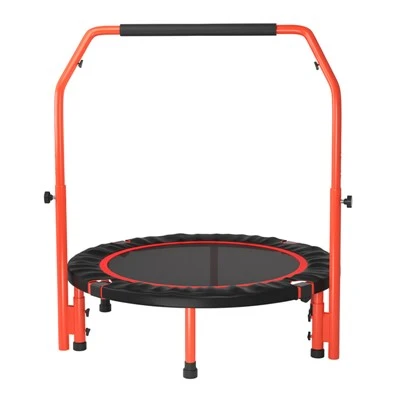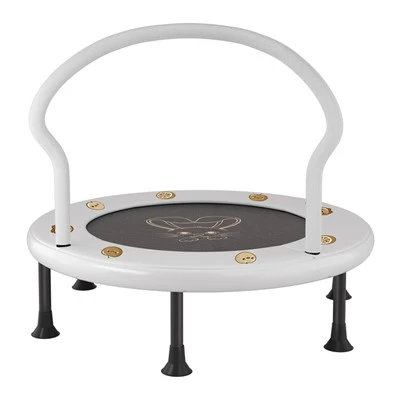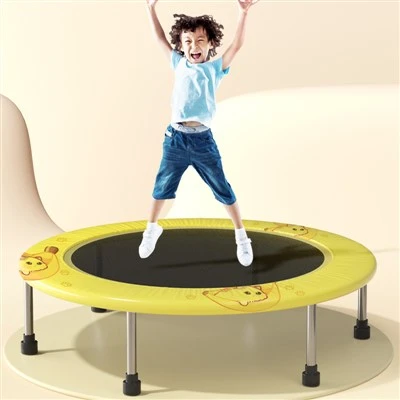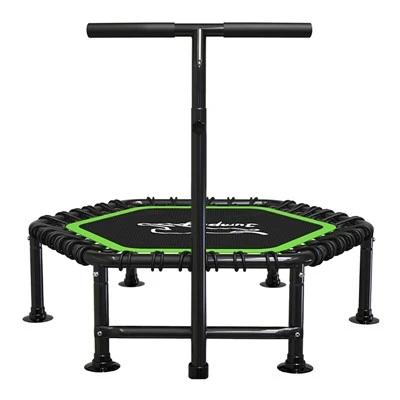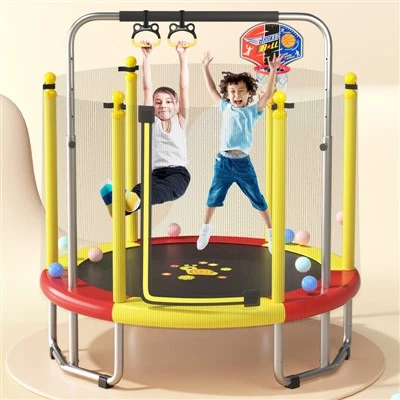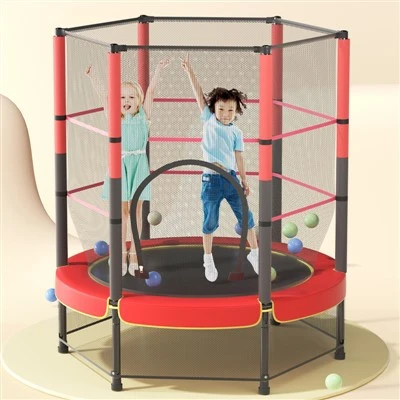
Trampolines can be classified in various ways, mainly according to national standards, common forms, shapes, uses, and installation methods. According to the Chinese national standard GB/T 32611-2016 "Functional and Safety Requirements and Test Methods for Gymnastics Trampolines," trampolines can be classified according to their design type and size as follows: folding (Type I) trampolines, enclosed (Type II) trampolines, open small (Type III) trampolines, double-sided (Type IV) trampolines, and pit-type (Type V) trampolines. Common public trampolines can be roughly divided into steel-framed traditional trampolines, inflatable combination trampolines, and bungee jumping small trampolines. Trampoline parks mostly use large combination trampolines, which are usually equipped with climbing walls, basketball courts, slides, and spider web structures. Mini trampolines, also known as bouncers, are small in size and designed for indoor fitness and low-impact sports; they are sometimes also suitable for young children. Circular trampolines naturally guide the jumper towards the center during a bounce, making them safer for children; rectangular trampolines offer higher, more controllable bounces, making them more popular with gymnasts and athletes.
Trampolines can be categorized by installation method into ground-mounted trampolines and embedded trampolines. Embedded trampolines are installed flush with the surrounding grass or ground, resulting in a cleaner appearance and higher safety.