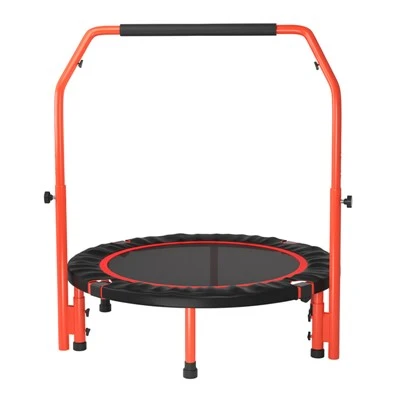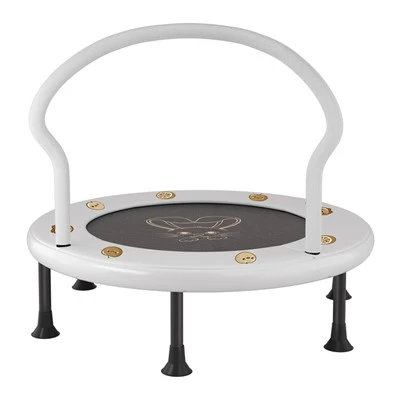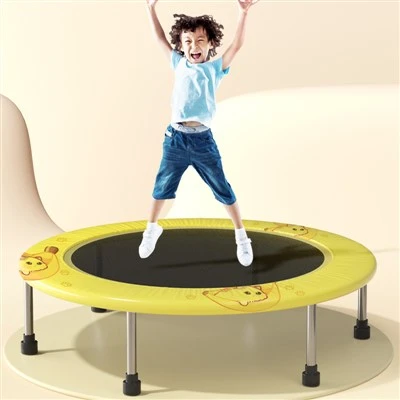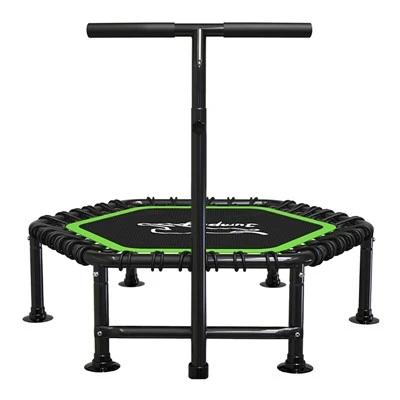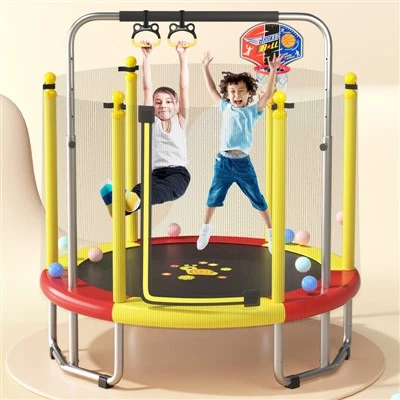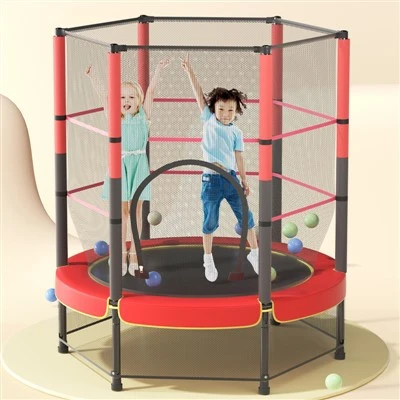
Large trampolines with safety nets and outdoor trampolines have become increasingly popular children's sports facilities in recent years. Their core function is to promote children's physical development through jumping, while ensuring safety through structural design. These facilities typically use a combination of galvanized pipes and PVC/PE materials, offering both load-bearing capacity and weather resistance. Suitable for both indoor and outdoor use, they can support up to 300 kg and accommodate 9-12 children aged 4 and above simultaneously. Their height design (e.g., 255 cm) balances jumping space and stability.
From a sports science perspective, jumping stimulates children's growth plates, promoting height development. Simultaneously, by maintaining balance and adjusting jump direction, they strengthen core muscles and improve coordination. Taking large trampolines with safety nets as an example, the safety net is made of high-density polyethylene (PE) with a mesh spacing of less than 5 cm, effectively preventing children from falling due to loss of control during jumps. The bottom frame uses thickened galvanized steel pipes, typically exceeding 4 cm in diameter, combined with a cross-support structure to distribute impact and prevent localized deformation. This type of design allows the facility to maintain structural stability even when supporting a weight of 300 kg, meeting the needs of multiple users simultaneously.
Outdoor trampolines, on the other hand, prioritize environmental adaptability. Their PVC fabric is treated with UV protection to resist rain and sun, extending its lifespan. The bottom frame is reinforced with counterweights or ground anchors to prevent tipping in strong winds. For example, some outdoor models feature adjustable legs at the four corners of the frame, adapting to uneven ground and increasing stability by increasing the contact area. Furthermore, both types of facilities utilize a modular design, allowing for adjustments to dimensions based on available space (such as a circular structure with a diameter of 3660 mm), facilitating flexible deployment both indoors and outdoors.
Safety is the core design principle for both types of facilities. In addition to the safety net and frame structure, the edges of the fabric are typically wrapped with 5 cm thick EPE foam padding to reduce the impact of collisions between children and hard components. The connection between the fabric and the frame uses springs or elastic ropes, providing bounce power while preventing children's fingers from being pinched. These detailed design features ensure that the facilities meet the needs of sports activities while minimizing safety risks, making them an ideal choice for children's outdoor activities and family entertainment.