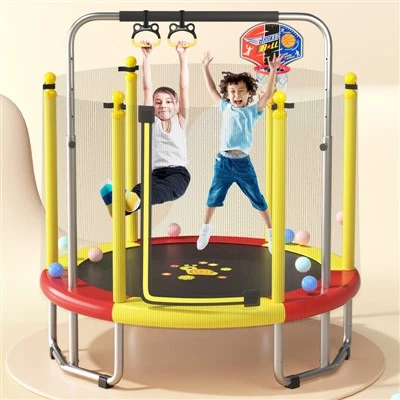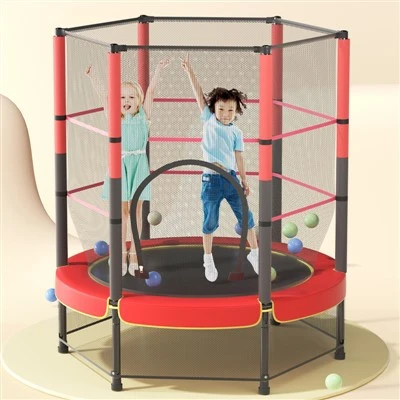
Every weekend, have you ever experienced this: your child spins around the living room like a little top, jumping on the sofa, bouncing on the bed, constantly complaining, "So boring!" The toy storage box you just tidied up is turned upside down in less than ten minutes, and the whole living room looks like it's been swept by a typhoon.
I understand this feeling, especially for families living in high-rise apartments. Children have boundless energy but nowhere to release it, so they "destroy" the house. Taking them outdoors to play is even more difficult if the weather is bad or the time isn't right. Actually, it's not that children are disobedient; it's that they are born needing to develop their physical coordination and release excess energy through jumping.
Why Do Children Always Love to Jump and Jump?
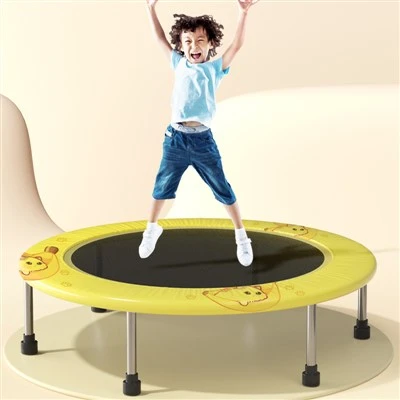
From a child development perspective, jumping is an indispensable part of a child's growth. When a child jumps, all their muscle groups work together, exercising the coordination of their legs, core, and arms, while the vestibular system constantly adjusts its balance. Simply put, children's love of jumping is an instinctive need for their physical development.
Many parents feel that limited space at home makes it impossible to prepare a dedicated play area for their children. Actually, a trampoline that occupies less than one square meter can solve this problem. It doesn't require much space; a corner of the balcony, next to the coffee table in the living room, or even the bay window area in the bedroom can easily fit.
Choosing a Trampoline: These Factors Determine Whether Your Child Will Want to Play
I made many mistakes when choosing a trampoline for my child. Initially, I bought a cheap one with exposed springs, but my child lost interest after two days, and the springs were extremely noisy, prompting complaints from the downstairs neighbors. Later, I switched to this foldable model, which truly made my child love indoor exercise.
Foldable Design, Space-Saving Storage
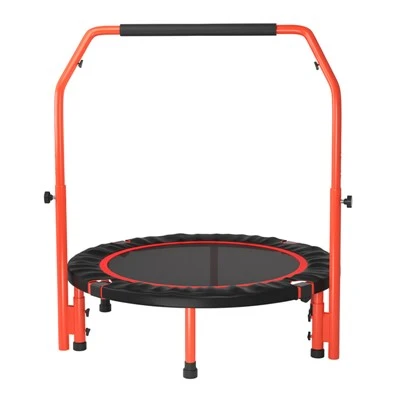
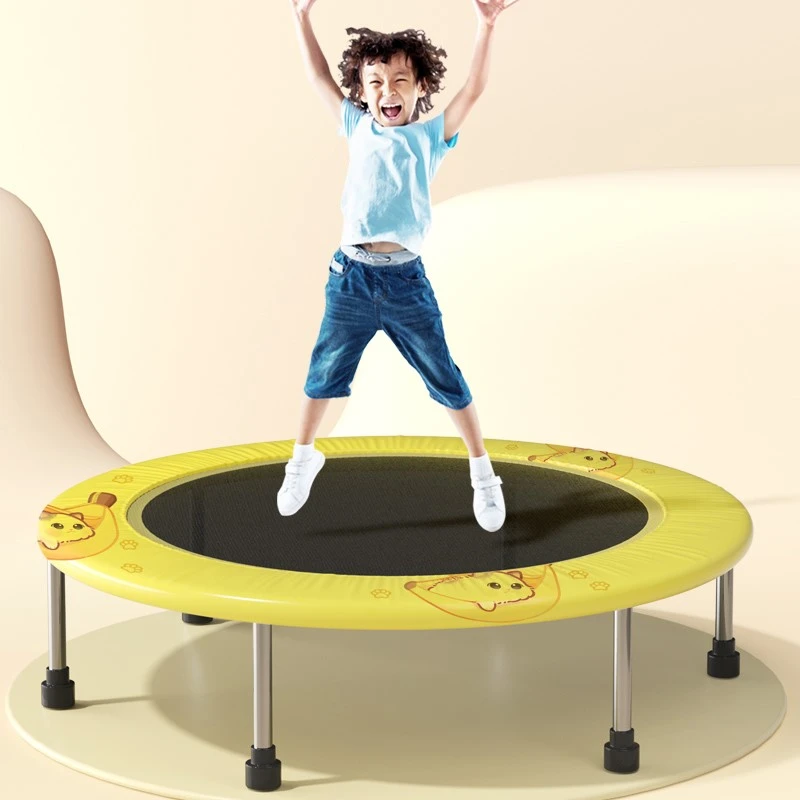
The biggest highlight of this trampoline is its foldable design. When not in use, it can be folded up and tucked behind a cabinet, instantly making the living room tidy. On weekends or when the child wants to play, unfolding it takes only ten seconds-no tools, no screws required, just a gentle pull and it's set.
Compared to fixed trampolines, its biggest advantage is its flexibility. When guests come over, it can be folded up to make room; when the kids get tired of it, changing its location brings a fresh experience. Moreover, its folded size is very compact, easily fitting in the trunk of a car, and it's perfect for taking to the park or picnics, satisfying the child's jumping needs anytime.
Safety rails protect your child's every jump
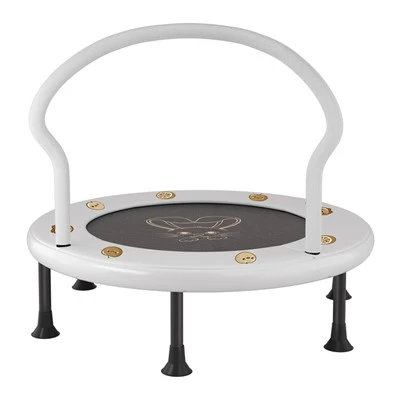
The biggest fear with trampolines is falls. This trampoline's rails are carefully designed to be about five centimeters higher than ordinary models on the market. When a child jumps, their center of gravity stays within the rails, preventing them from tipping over. The edges are also padded, so even if the child bumps into something, it won't hurt.
Furthermore, the trampoline's bounce surface uses thickened elastic fabric, unlike those hard spring mattresses. The elasticity is even and gentle, preventing excessive rebound from any one point of stress, protecting the child's knees and ankles and avoiding the risk of injury.
Included storage bag keeps toys organized
I especially recommend the version with a ball pit and storage bag. When children get tired of playing, they can put the balls in a storage bag, cultivating good tidying habits. The ball pit also offers many ways to play; for example, throwing the balls into a trampoline allows children to jump and retrieve them, improving jumping ability and hand-eye coordination.
What practical benefits does a trampoline bring to children?
Releasing boundless energy, saving parents time and effort.
Previously, my child would start getting restless in the afternoon, insisting I play all sorts of physical games with him, leaving me exhausted after half an hour. Now, with the trampoline, he can jump on it for twenty minutes on his own, leaving him covered in sweat, in a great mood, and sleeping soundly at night-no more need to coax him to sleep.
Improving physical coordination, more practical than early childhood education classes.
I've observed that when children jump on a trampoline, they need to constantly adjust their center of gravity to maintain balance. This process is very effective in training core strength and balance. After a month of consistent use, I noticed my child walks much more steadily, is less prone to falling while running, and is even more skilled at bouncing a ball.
Play indoors even on rainy days, unaffected by weather.
During the rainy season in the south or the smoggy days in the north, children easily become irritable staying indoors for long periods. With a trampoline, they can jump around freely at home even in bad weather, solving the dilemma of "not wanting to go out but needing to be active." Moreover, the trampoline's quiet design is excellent; I specifically tested it at my downstairs neighbor's house, and the jumping noise was barely audible, so there's no need to worry about disturbing the neighbors.
How to play for children of different ages
2-3 year olds: Children at this stage have just learned to walk and jump, and need parental supervision. Let them gently bounce on the trampoline for five to ten minutes each time, mainly using support, which helps develop balance without being too tiring.
3-6 year olds: This is the period when children have the most energy. They can jump independently on the trampoline, and with a ball pit, they can play in many different ways. For example, parents can stand beside them and throw balls, and the child jumps up to catch them, or the parent can throw the balls into the trampoline, and the child jumps and tries to catch them. There are many ways to play, so children won't get bored.
For children aged 6 and up: The difficulty can be gradually increased, such as setting a number of jumps before changing direction, or jumping to the rhythm of nursery rhymes to train their sense of rhythm and physical fitness. Children in this age group have stronger body control and can use the trampoline for longer.